
The best way to use ChatGPT for beginners in 2026 is not about memorising complex techniques — it is about understanding a few core principles that immediately improve every response you get.
After testing ChatGPT extensively across hundreds of use cases, these are the 8 tips that make the biggest difference for new users on the free plan.
| The Most Important Tip: Be specific. The single biggest upgrade beginners can make is to stop typing vague one-line prompts and start giving ChatGPT context: who you are, what you need, why you need it, and what format you want the answer in. |
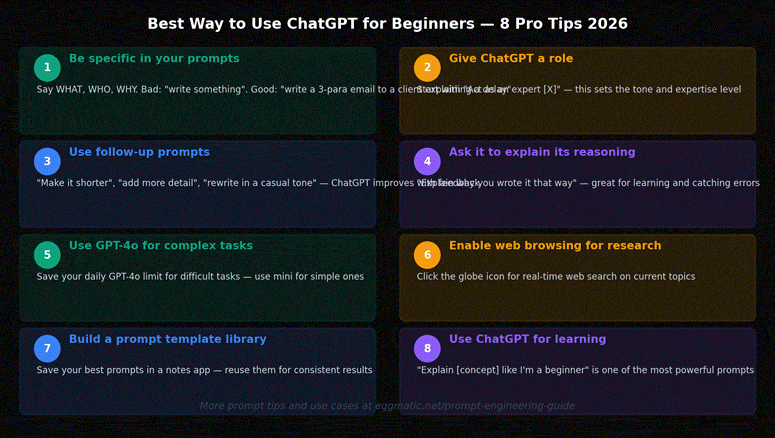
8 best ways to use ChatGPT for beginners in 2026 — tips that work on the free plan.
8 Best Practices for Using ChatGPT as a Beginner
1. Be Specific in Every Prompt
The most common beginner mistake is vague prompts. Compare these two: ‘Write something about marketing’ vs ‘Write a 250-word LinkedIn post for a freelance graphic designer announcing a new logo design service, aimed at small business owners, in a professional but friendly tone’. The second prompt gives ChatGPT everything it needs to get it right on the first try.
2. Give ChatGPT a Role
Start your prompt with ‘Act as an expert [role]’. Examples: ‘Act as an experienced copywriter’, ‘Act as a Python developer’, ‘Act as a personal finance coach’. This single addition dramatically improves the quality and relevance of responses.
3. Use Follow-Up Messages to Refine
ChatGPT responds to feedback. If the first answer is 80% right, do not start over — tell it what to fix. ‘Make it shorter’, ‘rewrite in a more casual tone’, ‘add two more examples’, ‘break this into bullet points’. Iteration is faster than rewriting your prompt from scratch.
4. Ask It to Explain Its Reasoning
‘Why did you write it that way?’ or ‘What sources or reasoning are you using here?’ are powerful follow-ups. They help you catch errors, learn from the response, and verify claims — especially important for factual topics.
5. Use GPT-4o for Complex Tasks Only
Save your limited daily GPT-4o messages for genuinely complex tasks. For quick edits, short emails, and simple research — use GPT-4o mini, which is unlimited. This stretches your free tier much further.
Full tip on managing limits: ChatGPT free plan limits 2026 · How to get GPT-4o free
6. Enable Web Browsing for Current Information
Click the globe icon in the message bar whenever you need current information — recent news, current prices, live sports scores, recent research papers. Without the globe icon active, ChatGPT’s knowledge may be outdated.
7. Build a Personal Prompt Library
Every time you write a prompt that generates a great result, save it in a notes app. Over time, you build a library of reusable templates: your go-to email prompt, your blog outline prompt, your code review prompt. This is one of the most underrated productivity habits for ChatGPT users.
8. Use ChatGPT as a Learning Partner
‘Explain [concept] like I’m a complete beginner’, ‘Give me 10 practice questions on [topic]’, ‘Quiz me on [subject] and tell me when I’m wrong’ — these prompts turn ChatGPT into a personalised tutor. It is one of the most valuable free educational tools available today.
If you want to monetise these skills, see our guide to how to make money with AI in 2026. For all the best AI tools compared: Best AI Chatbots 2026.
Frequently Asked Questions
How do I write better ChatGPT prompts?
Use the RACE formula: Role, Action, Context, Expectations. Tell ChatGPT what role to take, what to do, the background context, and the format you want. This structure consistently produces better results than single-line prompts.
Can beginners use ChatGPT without any technical knowledge? Yes — ChatGPT requires no technical knowledge to use. You interact entirely through natural language. The only skill that improves your results is learning to write more specific, detailed prompts, which comes naturally with a little practice.