
Saving money when you’re living paycheck to paycheck can feel not just difficult — but genuinely impossible. When your income barely covers rent, groceries, and utilities, the idea of setting anything aside sounds like advice written for someone else.
But here’s the truth: saving money on a low income is possible. It doesn’t require radical sacrifice, a second degree, or a lucky break. What it does require is a clear strategy, a few smart habits, and an honest look at where your money is actually going.
This guide walks you through 25 actionable, real-world strategies to help you build savings — no matter how tight your budget feels right now. We’ll cover budgeting fundamentals, reducing your biggest expenses, maximizing government benefits, and building a financial safety net step by step.
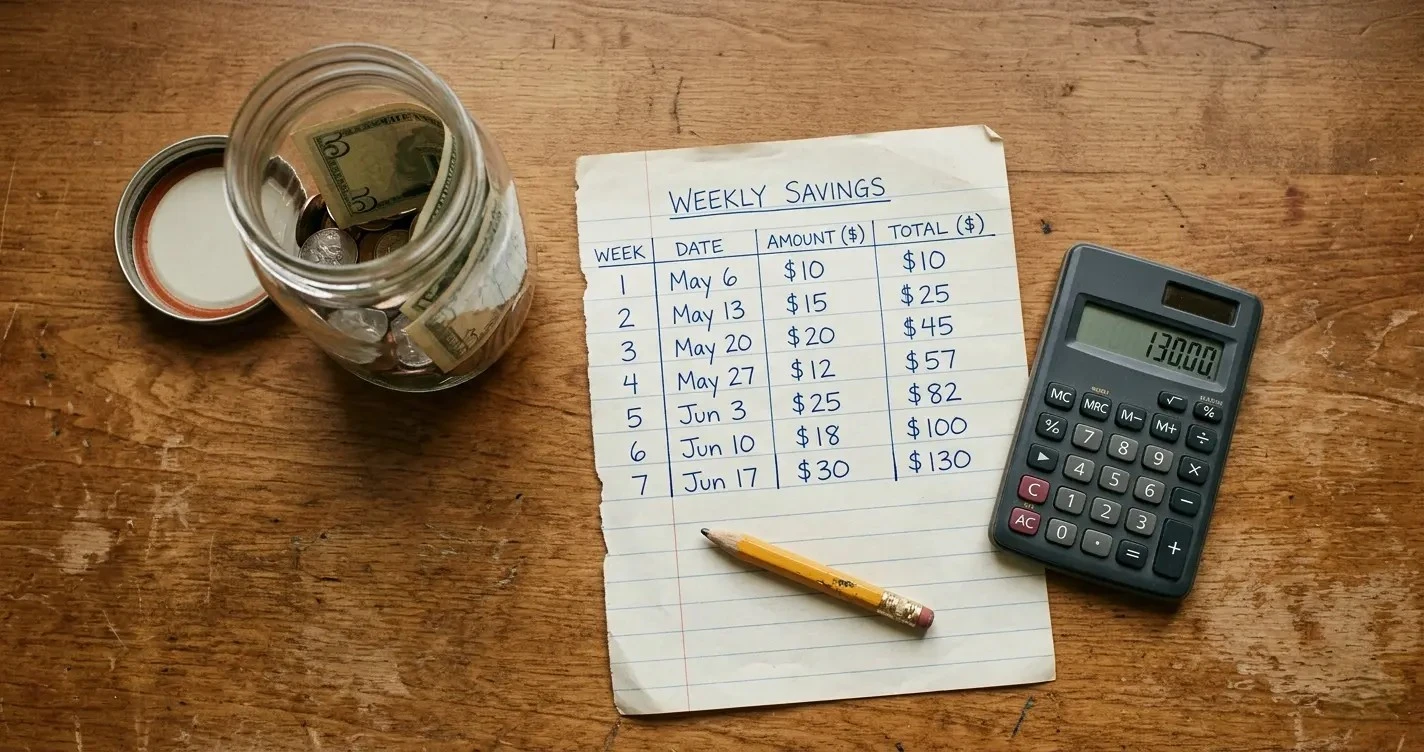
| 📌 Key Takeaway Even saving $10–$25 per week adds up to $500–$1,300 per year. Starting small and staying consistent is the foundation of every financial success story — on any income. |
1. Understand Why Low-Income Saving Is Different
Before diving into tactics, it’s important to acknowledge something that most personal finance articles skip: saving money when income is genuinely low is structurally harder, not just a matter of discipline.
Research published by the Brookings Institution found that financial stress activates the same cognitive load as losing roughly 13 IQ points — meaning tight budgets can actively impair the very decision-making we need to navigate them. This is not a character flaw. It’s a documented psychological phenomenon.
Understanding this matters because it shifts your mindset. You’re not failing because you lack willpower. You’re navigating a system that makes saving genuinely difficult. The strategies in this guide are designed with that reality in mind — practical, low-friction, and kind to your mental bandwidth.
2. Start With an Honest Budget (The Foundation of Everything)
You cannot save money you don’t know you have. Before anything else, you need a clear, honest picture of your income and spending. If you’re new to budgeting entirely, our guide on how to make a budget for beginners walks through the complete process step by step.
Step 1: Track Every Dollar for 30 Days
Use a free app like Mint, YNAB, or even a simple spreadsheet. Write down every purchase — coffee, a phone top-up, the parking meter. Most people are genuinely surprised to discover they spend $80–$150 per month on small, invisible purchases they never consciously registered.
Step 2: Categorize Your Spending
Group your spending into three buckets:
- Fixed necessities: rent, utilities, loan repayments, insurance
- Variable necessities: food, transportation, medicine
- Discretionary: subscriptions, eating out, entertainment, impulse buys
Your savings opportunity lives primarily in the third category — and sometimes the second.
Step 3: Modify the 50/30/20 Rule for Low Incomes
The classic 50/30/20 budget (50% needs, 30% wants, 20% savings) doesn’t work when your income is too low for those ratios. Instead, try the adjusted model recommended by the Consumer Financial Protection Bureau (CFPB):
| Category | Standard 50/30/20 | Low-Income Adjusted |
| Needs | 50% | 70–75% |
| Wants | 30% | 15–20% |
| Savings | 20% | 5–10% (even $20/month is a start) |
The goal isn’t to hit these ratios immediately — it’s to understand where you stand today and work toward healthier proportions gradually.
3. Build Your Emergency Fund First
Financial advisors typically recommend saving 3–6 months of expenses as an emergency fund. On a low income, that goal can feel paralysing. Here’s a better approach: start with a $500 micro-emergency fund.
Why $500? Research from the Urban Institute found that families with even $250–$749 in liquid savings are significantly less likely to face eviction, miss a bill payment, or fall into payday loan debt after an unexpected expense. $500 is a realistic, achievable goal that provides real protection — without requiring years of extreme sacrifice. Once you’ve hit $500, push toward one month of essential expenses, then two, and so on.
| 💡 Pro Tip: Use a Separate Account Open a free savings account at a different bank than your checking account. The friction of moving money between institutions makes it psychologically harder to dip into savings impulsively. Marcus by Goldman Sachs and Ally Bank offer high-yield savings accounts with no minimum balance. |
4. Reduce Your Biggest Expenses First
Small savings on coffee add up slowly. Large savings on rent and food change your finances fast. Focus on your biggest line items first.
Housing: Your Largest Expense
Rent or mortgage typically eats 30–50% of a low income. Options to reduce this include:
- Negotiating rent: many landlords prefer keeping a reliable tenant over finding a new one. Ask politely — especially if you’ve been a good tenant.
- Taking in a roommate: splitting rent with one person can save $400–$800/month in most cities.
- Applying for housing assistance: the U.S. Department of Housing and Urban Development (HUD) administers Section 8 vouchers and public housing programs. Check eligibility at hud.gov.
- Moving to a lower-cost area: even moving one neighborhood further from a city center can cut rent by 15–25%.
Food: The Most Flexible Expense
Food is one of the most controllable budget categories. The average American household spends $412/month on groceries according to the USDA. With intentional habits, this can often be cut by 30–40%.
- Meal plan weekly: decide meals before shopping, not at the store. This single habit reduces waste and impulse purchases dramatically.
- Shop store brands: generic products are typically 20–30% cheaper than branded equivalents and often identical in quality.
- Use discount grocery stores: Aldi, Lidl, and WinCo consistently outprice mainstream supermarkets by significant margins.
- Batch cook on weekends: cooking in bulk reduces per-meal costs and eliminates the temptation of expensive takeout on tired weeknights.
- Apply for SNAP benefits: the Supplemental Nutrition Assistance Program provides monthly food assistance for eligible low-income individuals and families. Check eligibility at benefits.gov.
Transportation Costs
If you own a car, it may be your second-largest expense after housing. Consider:
- Refinancing your auto loan if rates have dropped since you took it out
- Using public transit for your primary commute and keeping the car for weekends
- Carpooling with coworkers — even splitting costs 2 ways can save $150–$300/month in fuel
- Checking if your employer offers pre-tax commuter benefits
5. Slash Utility and Subscription Bills
Utilities
- Call and negotiate: many utility providers have low-income assistance programs. The Low Income Home Energy Assistance Program (LIHEAP) provides federally funded help with heating and cooling bills.
- Audit your energy use: unplugging devices on standby, switching to LED bulbs, and setting your thermostat 2–3 degrees lower can reduce electricity bills by 10–15%.
- Check for Lifeline: the FCC’s Lifeline program provides eligible low-income households with discounts of up to $9.25/month on phone or broadband service.
Subscription Audit
The average American unknowingly spends $133/month on subscriptions they barely use, according to a 2022 C+R Research study. Go through your bank and credit card statements and cancel anything you haven’t actively used in the past 30 days.
- Use one streaming service at a time, then rotate
- Share family plans for music (Spotify, Apple Music) to split the cost
- Cancel gym memberships you don’t use — YouTube has thousands of free workout videos
- Use your local library for ebooks, audiobooks, and even free digital magazine access through apps like Libby
6. Take Full Advantage of Government Assistance Programs
Billions of dollars in government benefits go unclaimed every year because people either don’t know they qualify or feel uncomfortable applying. These are not charity — they are programs funded by taxpayers specifically for people in your situation.
| Program | What It Covers | Who Qualifies |
| SNAP | Monthly food assistance for groceries | Low-income individuals & families |
| Medicaid | Free/low-cost health insurance | Low-income adults & children |
| CHIP | Health coverage for children | Families above Medicaid threshold |
| EITC | Refundable tax credit — up to $7,830/year | Working low-to-moderate income earners |
| WIC | Nutritional support & food vouchers | Pregnant women, new mothers, children under 5 |
| LIHEAP | Help with heating & cooling bills | Low-income households |
| Lifeline | Phone/broadband discount up to $9.25/month | Low-income households |
| Section 8 / HUD | Housing vouchers and public housing | Very low-income households |
| Saver’s Credit | Tax credit up to 50% of retirement contributions | Low-to-moderate income earners who save for retirement |
The benefits.gov eligibility screener can show you every federal program you may qualify for in under 10 minutes. Use it.
7. Automate Your Savings — Even Small Amounts
One of the most powerful personal finance concepts is this: save first, spend what remains. Not the other way around.
When you automate savings, you remove the willpower equation entirely. The money moves before you can spend it. Apps like Chime, Current, and Acorns allow you to automatically round up purchases and deposit the difference into savings — a method that feels painless but produces real results over time.
If you receive a paycheck through direct deposit, most employers will allow you to split it between accounts. Even directing $15–$25 per paycheck into a separate savings account creates the habit and builds momentum. The amount matters less than the consistency.
| 📊 A More Nuanced Take on the “Latte Factor” The popular “skip your daily coffee and save” advice is often criticized — and for good reason. Cutting $5 coffees won’t fix a systemic income problem. But the underlying principle matters: small, consistent automated savings compound over time. The goal isn’t deprivation. It’s intentionality. |
8. Use Free Financial Tools and Apps
You don’t need a financial advisor to manage your money better. These free tools can help significantly:
- YNAB (You Need A Budget): one of the most effective budgeting apps available, with a free trial and reduced pricing for students.
- Mint: free budgeting and bill-tracking app that connects to your bank accounts and categorizes spending automatically.
- Credit Karma: free credit score monitoring and personalized tips to improve your credit — which can help you qualify for lower-interest loans and better housing.
- NerdWallet: excellent free comparison tool for savings accounts, checking accounts, and credit cards.
- CFPB Budget Worksheet: a free, straightforward budgeting tool from the Consumer Financial Protection Bureau, designed specifically for people managing tight finances.
9. Avoid Debt Traps That Drain Low-Income Budgets
Certain financial products are disproportionately marketed to low-income households and can trap people in cycles of debt that are genuinely difficult to escape.
Payday Loans
Payday loans carry average annual percentage rates (APR) of 400% or more, according to the Consumer Financial Protection Bureau. A $300 payday loan can cost $345–$390 to repay two weeks later. If you regularly rely on payday loans, this is a priority problem to solve.
Alternatives include: credit union small-dollar loans (typically 28% APR cap), employer paycheck advances, local nonprofit emergency funds, and community development financial institutions (CDFIs).
Minimum Payments on Credit Cards
Paying only the minimum on a credit card is one of the most expensive financial habits possible. On a $2,000 balance at 24% APR, minimum payments could take 10+ years to clear and cost $2,000+ in interest — effectively doubling the original debt. If you have credit card debt, prioritize paying more than the minimum, even by $25–$50 extra per month.
10. Build Income Gradually on the Side
Ultimately, saving money is easier when there’s more income coming in. If you’ve cut spending to the bone and still can’t find margin, the answer is to earn more — even slowly. Our guide on how to stop living paycheck to paycheck covers income-building strategies in detail.
Low-Barrier Income Ideas
- Sell unused items: eBay, Facebook Marketplace, and OfferUp are free to use. A single weekend clearing out unused electronics, clothes, and furniture can generate $100–$500.
- Gig economy work: platforms like DoorDash, Uber Eats, and Instacart allow flexible part-time work with no interviews and fast onboarding.
- Freelancing micro-tasks: Fiverr and TaskRabbit let you monetize practical skills — writing, design, cleaning, handyman work — on your own schedule.
- Survey and testing sites: UserTesting.com pays $10–$60 per website usability test, typically 20 minutes each.
- Pet sitting and dog walking: Rover is the largest platform for pet care work. Dog walking in urban areas can earn $15–$20/hour with no startup cost.
11. Take Care of Your Credit Score
Your credit score has a direct financial impact that many people on low incomes overlook. A higher credit score means lower interest rates on car loans and mortgages, better chances of being approved for rental housing, and even cheaper insurance rates in many states.
You can check your credit report for free once a year from all three major bureaus (Equifax, Experian, TransUnion) at AnnualCreditReport.com — the only federally authorized free source.
Simple Credit-Building Habits
- Pay every bill on time, every time. Payment history is 35% of your FICO score.
- Keep credit card utilization below 30% (ideally below 10%) of your available limit.
- Don’t close old accounts — account age improves your credit score over time.
- Consider a secured credit card if you’re building credit from scratch — they require a deposit equal to your credit limit and report to all three bureaus.
12. Think Long-Term: Retirement Savings Even on a Tight Budget
Retirement savings feel like a luxury on a low income. But the earlier you start — even with tiny amounts — the more compound interest works in your favor.
Where to Start
- If your employer offers a 401(k) match: always contribute at least enough to get the full match. This is a 50–100% instant return on your investment — the most powerful financial move available to working Americans.
- Roth IRA: if you have earned income, you can open a Roth IRA at Fidelity or Vanguard with no minimum balance. Contributions are post-tax but grow tax-free — particularly valuable if you expect to be in a higher tax bracket in retirement.
- Saver’s Credit: this IRS tax credit returns up to 50% of your retirement contributions — specifically for low-to-moderate income earners. Real money back, available to people who save even small amounts.
Once you have a savings habit established and an emergency fund in place, understanding the difference between saving and investing becomes critical. See our guide on saving vs. investing for how to think about deploying money once you have margin to work with.
Quick Wins: 10 Things You Can Do This Week
| # | Action | Potential Savings |
| 1 | Cancel unused subscriptions | $30–$120/month |
| 2 | Set up $20/week auto-transfer to savings | Builds $1,040/year |
| 3 | Check benefits.gov for programs you qualify for | Up to $500+/month |
| 4 | Switch to store-brand groceries | $40–$80/month |
| 5 | Meal plan and batch cook this weekend | $50–$120/month |
| 6 | Call your internet/phone provider and negotiate | $15–$40/month |
| 7 | Check your credit report at AnnualCreditReport.com | Free |
| 8 | Apply for the EITC at tax time if eligible | Up to $7,830/year |
| 9 | Sell 5 unused items on Facebook Marketplace | $50–$300 one-time |
| 10 | Download a budgeting app and track for 7 days | Awareness = savings |
Frequently Asked Questions
How much should I try to save if my income is very low?
Start with whatever creates no stress — even $5 or $10 per week. The goal in the early stages is to build the habit and the account, not to hit a specific number. Research consistently shows that the habit of saving — not the amount — is the most important predictor of long-term financial stability. Once the habit is established, increase the amount gradually as your income or expenses shift.
Is it worth saving when I have high-interest debt?
Yes — a small emergency fund should coexist with debt repayment. Without any savings cushion, every unexpected expense (car repair, medical bill) pushes you back into debt and erases your repayment progress. Build a $500 starter fund first, then attack high-interest debt aggressively. Once the high-rate debt is gone, shift more toward savings.
What if I genuinely can’t find any money to save after expenses?
This is a real situation and it’s more common than financial content acknowledges. If you’ve tracked every dollar for 30 days and there’s truly no margin, the priority becomes income — not savings discipline. Look at side income, government assistance programs, and ways to reduce your three largest expenses. Even a $50/month side income can break a stalemate. Also review Section 6 of this guide — many people qualify for programs that would reduce essential expenses and free up cash immediately.
What government programs are most commonly overlooked?
The EITC (Earned Income Tax Credit) is one of the most underutilized — many eligible workers don’t claim it simply because they don’t know it exists. The Lifeline phone/broadband discount and LIHEAP energy bill assistance are also widely unclaimed. Run the benefits.gov eligibility screener — it takes 10 minutes and many people discover programs worth hundreds of dollars per month.
Should I have a sinking fund even on a low income?
Yes — even a minimal one. A $30–$50/month car maintenance sinking fund and a $25/month medical fund can prevent the most common budget-busting expenses from hitting your emergency fund or going on a credit card. Start with just two categories, keep the amounts small, and add more as your situation improves.
How do I stay motivated to save when progress feels slow?
Track your balance every week — even if the number is small. Watching a number grow from $0 to $50 to $150 creates real psychological momentum. Many people also find it helpful to rename their savings account with a specific goal: “Car Repair Fund” or “3-Month Safety Net” instead of just “Savings.” The named goal makes the abstraction concrete and the motivation tangible.
Can I start investing while on a low income?
Not until you have your emergency fund in place and high-interest debt under control. Once those two foundations are solid, a small retirement contribution — even $25/month into a Roth IRA — is a reasonable next step. The Saver’s Credit can effectively boost your return by up to 50%. Investing before you have financial stability is like building the roof before the foundation.
The Bottom Line: Progress Over Perfection
Saving money on a low income is not about finding one magic trick. It’s about making a series of small, deliberate decisions consistently over time. Every dollar redirected from an unused subscription to a savings account, every benefit program you apply for, every impulse purchase you pause on — these add up.
You don’t need to implement all 25 strategies at once. Choose two or three this week. Build from there. Financial security is not a destination you arrive at suddenly. It’s a direction you walk in, steadily, one step at a time.
The fact that you’re reading a guide like this means you’re already doing something most people don’t: taking your finances seriously. That mindset — more than any specific tactic — is the foundation of financial resilience.
| 🚀 Your 3-Step Start Right Now 1. Go to benefits.gov and run the eligibility screener. It takes 10 minutes and many people find programs worth $100–$500/month they weren’t claiming. 2. Open your bank app and cancel one subscription you haven’t used in 30 days. Move that amount to a savings account. 3. Set up an automatic transfer of $10–$25 on your next payday — to a separate account, at a different bank if possible. |