Foldable Phones in 2026: Are They Worth Buying Yet?
Are foldable phones worth it in 2026? Compare the latest Samsung, Google, and Apple models, prices, durability, and everyday tradeoffs.

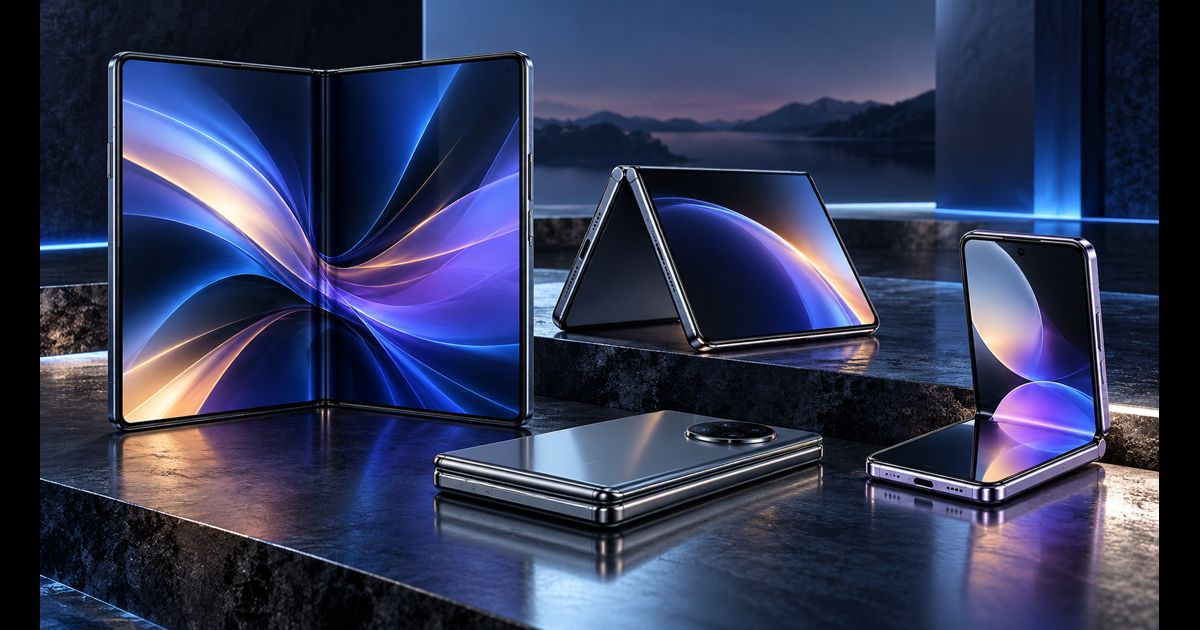
Foldable phones in 2026 are dramatically better than the bulky, expensive experiments that introduced the category. Samsung, Google, and Apple now offer devices with thinner designs, stronger hinges, improved water resistance, and software built around flexible displays. But with premium book-style foldables costing nearly $2,000 or more, the important question is whether that extra screen space delivers enough everyday value to justify the price.
Quick Answer: Are foldable phones worth it in 2026? Yes, foldable phones are worth buying in 2026 if you regularly multitask, read documents, watch videos, or want a tablet-sized screen without carrying another device. However, traditional flagship smartphones still offer better overall value, often with superior cameras, simpler durability, and lower repair costs. For most buyers, foldables are finally practical, but they remain a premium choice rather than a necessity.
How Foldable Phones Have Improved in 2026
The biggest changes in foldable phones are not just larger screens or faster processors. Manufacturers have spent several generations addressing the problems that previously made foldables difficult to recommend: thickness, weight, visible creases, hinge reliability, and resistance to environmental damage.
Thinner and Lighter Designs
Samsung’s Galaxy Z Fold 8 weighs just 201 grams, making it the lightest book-style foldable in its lineup. It measures 4.5mm when unfolded and approximately 9.7mm when closed, approaching the portability of conventional flagship phones.
The Galaxy Z Fold 8 Ultra weighs 215 grams but measures only 4.1mm when open. Google’s Pixel 11 Pro Fold is heavier at approximately 239 grams, while Apple’s iPhone Duo weighs 254 grams and measures 11.3mm when folded.
These differences matter when carrying a phone throughout the day. A device that feels comfortable during a five-minute demonstration might become tiring during extended reading or one-handed use.
Better Hinges and Less Noticeable Creases
Foldable manufacturers now use refined hinge mechanisms, improved flexible glass, and stronger supporting layers beneath their displays.
Samsung’s Armor FlexHinge and Flex Titanium display structure reduce visible folding distortion. The Galaxy Z Fold 8 Ultra has a noticeably flatter inner display than earlier generations, although its crease has not disappeared completely.
Manufacturers have historically tested foldable hinges for hundreds of thousands of folding cycles. However, buyers should distinguish laboratory ratings from real-world lifespan. A device rated for 200,000 folds would theoretically accommodate about 100 folds daily for more than five years, but those calculations do not account for drops, debris, or component failures.
For the latest 2026 devices, compare published model-specific hinge certifications rather than assuming every phone shares the same endurance rating.
Water and Dust Resistance
Protection has also improved significantly.
- Galaxy Z Fold 8: IP48 protection.
- Galaxy Z Fold 8 Ultra: IP48 protection.
- Google Pixel 11 Pro Fold: IP68 protection.
- Apple iPhone Duo: IP68 protection.
IP48 means protection against solid objects larger than 1mm and water immersion under specified testing conditions. IP68 adds a higher level of dust protection, making it preferable for people frequently exposed to dusty environments.
Neither rating makes a phone waterproof or immune to accidental damage. Sand, impacts, worn seals, and pressure on the flexible display remain legitimate concerns.
Book-Style vs Flip Foldables: Which Design Is Better?
Foldable phones generally fall into two categories. Although both use flexible displays, they solve very different problems.
Book-Style Foldables: Best for Productivity
Book-style devices open horizontally into compact tablets. Examples include the Galaxy Z Fold 8 Ultra, Pixel 11 Pro Fold, and iPhone Duo.
The Fold 8 Ultra has an 8-inch internal display, making it useful for viewing spreadsheets, comparing documents, and reading long articles. Samsung’s standard Fold 8 takes a different approach with a wider 4:3 internal display suited to reading and side-by-side content.
These phones make sense for consultants, designers, business owners, and frequent travelers who benefit from additional working space.
However, their larger dimensions and higher prices make them less compelling for someone who mainly messages friends, scrolls social media, and takes photos.
Flip Foldables: Best for Portability
Flip devices fold vertically into smaller packages. Samsung’s Galaxy Z Flip 8 illustrates this approach with a 6.9-inch main screen, 4.1-inch cover screen, and 180-gram weight.
The Flip 8 starts at approximately $1,199.99 in the United States. Its exterior display supports quick interactions without repeatedly opening the phone.
Flip phones are particularly appealing for pocketability, hands-free photography, video calls, and people who prefer compact devices.
Unlike book-style foldables, they do not provide a tablet-sized workspace. Their advantage is convenience, not significantly greater productivity.
Best Foldable Phones in 2026 Compared
The following comparison covers five notable models available or announced as of October 20, 2026. Prices represent US starting prices before taxes, promotions, and trade-in discounts. Thickness figures refer to unfolded devices unless stated otherwise.
| Phone | Starting Price | Weight | Thickness | Hinge Rating | IP Rating | Main Camera | Battery |
|---|---|---|---|---|---|---|---|
| Samsung Galaxy Z Fold 8 | $1,899.99 | 201g | 4.5mm | Not consistently published | IP48 | 50MP | 4,800 mAh |
| Samsung Galaxy Z Fold 8 Ultra | $2,099.99 | 215g | 4.1mm | Not consistently published | IP48 | 200MP | 5,000 mAh |
| Google Pixel 11 Pro Fold | $1,899 | 239g | 5.0mm | Not consistently published | IP68 | 48MP | Approx. 4,800 mAh |
| Apple iPhone Duo | $1,999 | 254g | 5.2mm | Not yet independently established | IP68 | 48MP | Dual-battery design |
| Samsung Galaxy Z Flip 8 | $1,199.99 | 180g | 6.1mm | Not consistently published | IP48 | 50MP | 4,300 mAh |
Important: Manufacturers do not publish comparable hinge-cycle certifications for every device. An unpublished figure is not evidence that a hinge is weaker. Likewise, battery capacity alone cannot predict endurance across different processors, displays, and operating systems.
Which Model Offers the Best Value?
The standard Galaxy Z Fold 8 has a compelling combination of low weight and large-screen functionality, although its lack of a dedicated telephoto camera limits photographic flexibility.
The Fold 8 Ultra adds a 200MP main camera, 5,000 mAh battery, and 45W wired charging. It runs One UI 9 with seven years of promised software updates. Its strong overall package has earned an 8.6/10 review assessment, but the $2,099.99 starting price remains substantial.
The Pixel 11 Pro Fold offers a dedicated 5x optical telephoto camera, strong Gemini integration, and seven years of updates. Meanwhile, the iPhone Duo is attractive to existing Apple users, but its October 23 release means full independent reviews are not yet available.
Foldable Cameras vs Traditional Flagship Phones
Camera quality remains one of the strongest arguments against spending extra on a foldable.
Foldable hardware must accommodate flexible displays, batteries, and complex hinges. That leaves manufacturers with less internal space for large camera sensors and sophisticated optical systems.
The Galaxy Z Fold 8 includes a 50MP main camera but no dedicated telephoto lens. That limits optical zoom compared with conventional photography-focused flagships.
The Fold 8 Ultra improves matters with its 200MP main sensor and 3x optical telephoto camera. Google’s Pixel 11 Pro Fold offers a 48MP main camera and 5x optical telephoto lens, making it particularly interesting for travel photography.
Still, megapixel counts do not tell the complete story. Sensor size, image processing, stabilization, and lens quality matter significantly more than headline resolution alone.
Practical recommendation: If photography is your primary priority, compare sample images and video performance against similarly priced non-folding flagships before purchasing.
Battery Life and Charging: What Are the Tradeoffs?
Battery performance has improved, but a larger internal display naturally consumes more energy when used extensively.
Samsung equips the Fold 8 Ultra with a 5,000 mAh battery and 45W wired charging. The standard Fold 8 uses a 4,800 mAh battery, while the compact Flip 8 carries 4,300 mAh.
Apple’s iPhone Duo uses a dual-battery architecture, with Apple advertising up to 31 hours of video playback on the inner display under its testing conditions. That figure should not be treated as equivalent to mixed daily usage.
Consider two users. Someone who checks messages primarily on the cover display may comfortably finish the day. Someone who continuously uses an 8-inch screen for navigation, video conferencing, and multitasking will typically consume more power.
For heavy travelers, a conventional flagship with proven endurance might remain the safer choice.
Software and Multitasking: The Real Reason to Buy a Foldable
Extra screen space becomes valuable when software makes practical use of it.
Samsung One UI 9
Samsung provides Multi Window, app continuity, a taskbar, and Samsung DeX support on its Fold 8 devices.
For example, a freelancer can display a client brief alongside a browser, drag relevant information between supported applications, and switch between tasks without repeatedly navigating through full-screen views.
One important distinction is that the standard Fold 8 does not support traditional Flex Mode because of its redesigned hinge. Buyers who frequently use partially folded positions should check this limitation carefully.
Google Gemini and Android Multitasking
The Pixel 11 Pro Fold combines Android 17 with Google’s Gemini features. Its larger screen is particularly convenient for researching information, reviewing AI-generated summaries, and managing documents across supported applications.
However, AI assistants are available on ordinary smartphones too. The benefit here comes from the additional working area, rather than exclusive access to artificial intelligence.
Apple iPhone Duo and iOS 27
Apple’s first foldable combines its A20 Pro processor with iOS 27 and a redesigned interface that adapts between its 5.4-inch outer display and 7.6-inch internal screen.
Apple also supports multiple viewing positions, including partially opened tabletop-style use. However, buyers should wait for independent assessments of app compatibility, multitasking, and durability before committing $1,999.
For people comparing productivity devices, our best AI laptop 2026 guide explores alternatives better suited to sustained professional workloads.
Are Foldable Phones Worth the Extra Money?
The price premium remains significant. Samsung’s Fold 8 starts at $1,899.99, while its Ultra version costs $200 more. Google’s Pixel 11 Pro Fold starts at $1,899, and Apple’s iPhone Duo begins at $1,999.
At these prices, consumers could instead purchase a powerful standard smartphone and potentially have substantial money remaining for a tablet or accessories.
The market also remains relatively small. According to Counterpoint Research’s September 2026 foldable market forecast, foldables represent approximately 2% of the overall smartphone market, while cumulative shipments are expected to exceed 100 million devices by the end of 2026.
Counterpoint also forecasts 37% year-over-year growth for 2027, suggesting increasing adoption without indicating that foldables have become mainstream necessities.
Before buying, calculate the complete cost of ownership, including a protective case, accidental damage coverage, repairs, and potential resale depreciation.
Also consider connectivity. Anyone switching between manufacturers should review our eSIM vs physical SIM guide to understand activation, compatibility, and device transfers.
Who Should Buy a Foldable Phone in 2026?
- Business professionals: Book-style foldables make sense when reviewing documents, responding to messages, and managing multiple applications throughout the day.
- Designers and creative workers: Large screens help with reviewing layouts, presentations, and visual references, although they cannot replace professional desktop software.
- Photographers: Choose carefully. The Pixel 11 Pro Fold and Fold 8 Ultra offer stronger camera flexibility than basic foldables, but conventional flagships remain competitive.
- Everyday users: A standard smartphone typically offers better value, fewer durability concerns, and simpler handling.
- Apple enthusiasts: Consider waiting for independent iPhone Duo reviews after its October 23 release.
- Compact-phone enthusiasts: A flip-style device such as the Galaxy Z Flip 8 offers a more affordable introduction to folding technology.
Foldables also compete with other premium entertainment devices. For immersive gaming and virtual experiences, a dedicated headset may provide more value. Our best VR headset 2026 guide covers that category separately.
What to Check Before Buying a Foldable
- Test the closed phone: Make sure you can comfortably type, answer calls, and use the exterior display without unfolding it.
- Inspect the inner screen: View bright and dark backgrounds to judge crease visibility, reflections, and text clarity.
- Compare camera results: Test portraits, nighttime photography, video, and optical zoom rather than relying on megapixel counts.
- Review repair coverage: Check screen replacement pricing, warranty exclusions, and accidental damage protection.
- Evaluate your workflow: Open two applications simultaneously and decide whether the extra screen space genuinely saves time.
A demonstration at a retailer can reveal usability issues that specification sheets cannot communicate.
Frequently Asked Questions
How long do foldable phones last in 2026?
A well-maintained modern foldable can potentially last several years, particularly with manufacturers offering longer software support. Samsung and Google promise seven years of updates on selected models. However, software longevity does not guarantee hardware durability. Hinge wear, flexible display damage, battery degradation, and repair availability determine whether an individual device remains practical over time.
Is the crease still visible on foldable phones?
Yes, most foldable phones still have some visible or tactile crease in 2026. Samsung’s Fold 8 Ultra uses improved display materials and hinge engineering to minimize the effect, while Apple’s iPhone Duo also emphasizes reduced crease visibility. Under direct lighting or at certain viewing angles, the fold area may still be noticeable.
Do foldable phones break easily?
Modern foldables are considerably more durable than early generations, but their flexible inner screens remain more vulnerable to concentrated pressure and sharp objects than conventional glass displays. Water resistance has improved, particularly on IP68-rated devices. Using a protective case, avoiding abrasive debris, and keeping the factory-applied screen protection intact can reduce common risks.
Are flip phones or fold phones better?
Flip phones are better for people prioritizing compact dimensions, portability, and everyday convenience. Book-style folding phones are better for multitasking, document reading, and large-screen entertainment. A Galaxy Z Flip 8 provides a smaller folded package, while the Galaxy Z Fold 8 Ultra offers an 8-inch working display. Neither design is universally superior.
Should I wait until 2027 to buy a foldable phone?
Waiting makes sense if you are concerned about repair costs, depreciation, or paying approximately $2,000 for a smartphone. Counterpoint Research forecasts continued foldable market growth in 2027, which could bring more competition and refined hardware. However, if current models already satisfy your needs and budget, there is no compelling technical reason everyone must wait.
Conclusion: Are Foldable Phones Finally Worth Buying?
Foldable phones in 2026 have reached a point where their benefits are practical rather than purely experimental. Samsung’s lighter designs, Google’s stronger dust protection and camera flexibility, and Apple’s entry into the market demonstrate substantial progress. However, the prices, repair risks, and remaining compromises prevent foldables from becoming the obvious choice for everyone.
If you regularly need a larger screen for work, reading, or multitasking, a modern book-style foldable can justify its premium. If your priorities are photography, battery endurance, durability, and value, a conventional flagship remains the smarter purchase. Buy a foldable for what its screen enables, not simply because it folds.