How to Spot an AI Voice Clone Scam in 2026 Before You Pay
Learn to recognise AI voice clone scams, verify emergency calls, protect your family and avoid fraudulent payment requests in 2026.

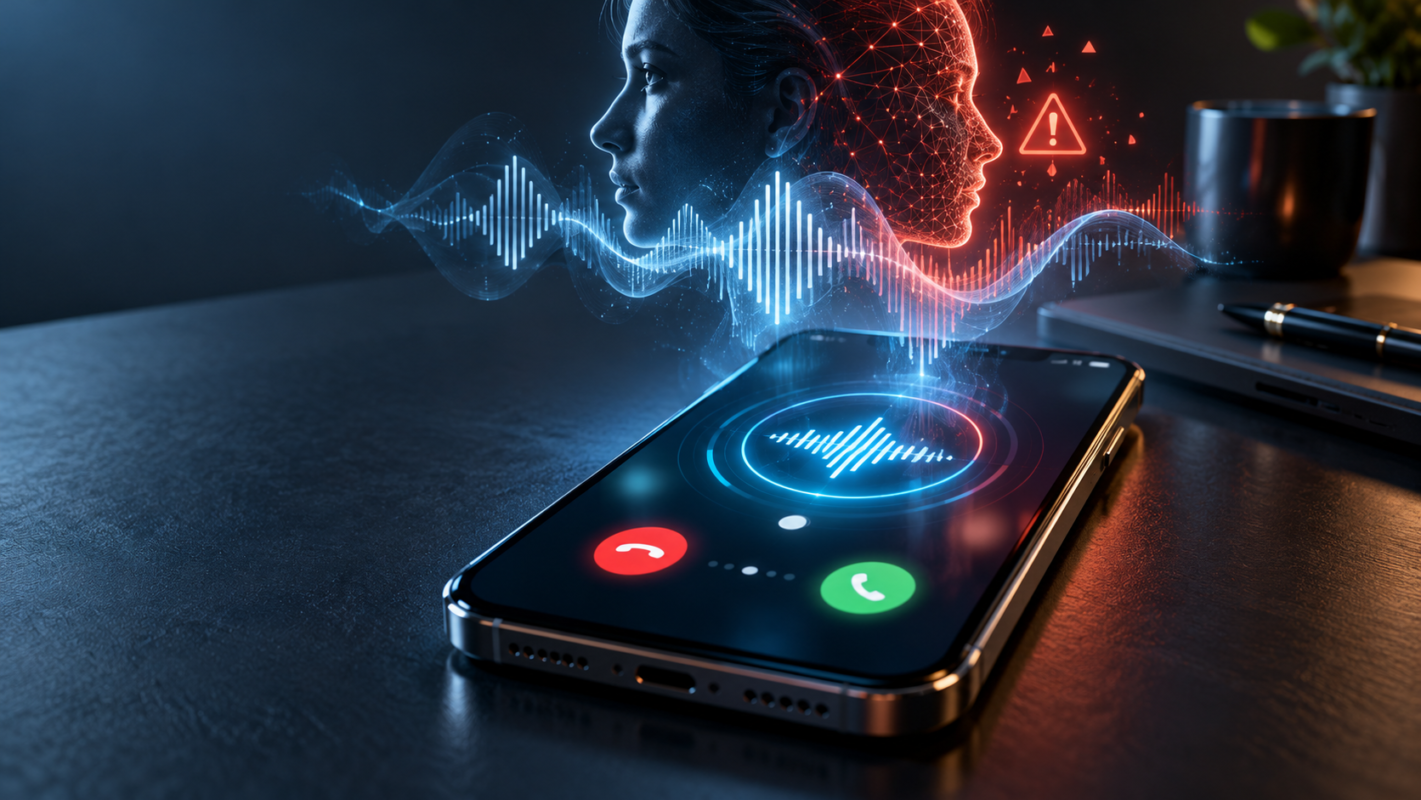
A familiar voice calls with frightening news. Your daughter has been arrested, your partner needs emergency medical treatment, or your manager needs an urgent bank transfer. The voice sounds convincing, but the person speaking might be a scammer using artificial intelligence.
In 2026, recognising an AI voice clone scam requires more than listening for robotic speech. Criminals can imitate familiar voices and combine them with believable personal details. The safest response is to verify the caller independently before sharing information or sending money.
How to Spot an AI Voice Clone Scam: The Quick Answer
To spot an AI voice clone scam, watch for urgent requests for money, demands for secrecy, unusual payment methods and pressure to stay on the phone. Never trust a familiar voice alone. Hang up, call the person using a saved number and confirm their situation independently. Use a private family safe phrase for additional verification before making any payment.
What Is an AI Voice Clone Scam?
An AI voice clone scam happens when a criminal uses artificial intelligence to imitate someone’s voice and persuade another person to disclose information, transfer money or take an unsafe action.
Modern voice cloning software can analyse recordings of somebody speaking and generate new speech that resembles their voice. A scammer might collect audio from social media videos, podcasts, public interviews or compromised accounts.
The attacker then creates a believable situation. They might pretend to be a relative involved in an accident, a colleague authorising a payment or a bank employee investigating suspicious activity.
Some attacks use prerecorded audio. Others combine generated speech with real-time conversation, allowing the criminal to answer questions and adapt their story.
According to NordVPN research reported in 2026, advertising for voice-cloning tools and services increased by 82% during 2025, followed by another 75% in the first seven months of 2026. These figures measure advertising activity in monitored criminal marketplaces, not the total number of successful scams.
The risk is already widespread. According to Hiya’s State of the Call 2026 report, approximately one in four Americans reported receiving a deepfake voice call during the previous 12 months.
The important lesson is that recognising someone’s voice is no longer reliable proof of their identity.
Seven Warning Signs of an AI Voice Clone Scam
1. The Caller Creates an Immediate Emergency
A common warning sign is an alarming story that supposedly requires action within minutes.
The caller might claim they have been involved in a road accident, detained by police, admitted to hospital or threatened by criminals.
These stories are designed to trigger panic. When people feel frightened, they may skip the normal checks they would make before transferring money.
A genuine emergency can require urgent action, but it does not remove the need to verify who is calling.
2. They Insist You Must Keep Everything Secret
Scammers frequently discourage victims from contacting relatives, colleagues or authorities.
They might say:
- “Please don’t tell Mum and Dad.”
- “The police said nobody else can know.”
- “This payment is confidential.”
- “You’ll make things worse if you call someone.”
Secrecy prevents independent verification. Treat any demand to hide an emergency payment as a serious warning sign.
3. The Voice Sounds Familiar but Something Feels Wrong
Some synthetic voices may contain unusual pauses, inconsistent emotional tone, unnatural breathing or changes in pronunciation.
However, these clues are unreliable. High-quality clones can sound natural, while legitimate calls may sound strange because of poor connections, illness or background noise.
Do not conclude that a caller is genuine simply because the voice sounds perfect. For additional context, see EggMatic’s guide on how to detect deepfakes.
4. They Refuse Independent Verification
A suspicious caller may claim their normal phone is broken, their battery is dead or they cannot accept a video call.
These explanations can be legitimate individually. They become concerning when combined with urgent payment demands and refusal to let you contact someone else.
If the caller insists that you must remain connected until payment is completed, stop the conversation.
5. They Request an Unusual Payment Method
Requests for cryptocurrency, gift cards, wire transfers or payments to unfamiliar accounts deserve particular attention.
Criminals favour methods that can be difficult to reverse. A caller may even provide detailed instructions for making the payment.
6. They Know Personal Details About Your Family
A scammer might mention a relative’s name, workplace, recent holiday or home address.
Such details can come from public social media profiles, leaked information or earlier phishing attempts.
Knowing personal information does not prove that a caller is genuine. Avoid using publicly visible facts as your only verification questions.
7. They Ask for Passwords or Security Codes
Some voice scams imitate bank employees, IT support workers or company managers instead of family members.
A caller may request a one-time password, authentication code, account login or approval of a security notification.
Never disclose authentication codes to an unsolicited caller. End the conversation and contact the organisation through its verified website, app or telephone number.
What to Do During a Suspicious Call: Six Steps
The following process works whether the caller claims to be your child, parent, partner, employer or bank.
- Stop before agreeing to anything. Do not promise payment, disclose financial information or approve a transaction. Tell the caller you need to verify the situation.
- Ask for the family safe phrase. If your family has established a private verification phrase, request it without revealing the answer. A correct phrase provides additional reassurance but should not replace an independent callback.
- Hang up completely. End the call rather than remaining connected while the caller explains why verification is impossible. On a landline, make sure the original connection has cleared before placing another call.
- Call the person using a trusted number. Open your saved contacts and dial their usual number yourself. Do not simply return the incoming call or use a number supplied by the suspicious caller.
- Verify through another trusted contact. If the person does not answer, contact a family member, friend, colleague or another independently verified contact. If there is credible evidence of immediate physical danger, contact the appropriate emergency service directly.
- Send money only after independent confirmation. If the emergency is genuine, verify the recipient, payment purpose and account details separately before proceeding.
This approach follows guidance from the US Federal Trade Commission, which advises consumers not to trust a familiar voice without independently checking the caller’s story.
How to Create a Family Safe Phrase Plan
A family safe phrase is a private verification phrase that relatives agree to use during unusual or emergency requests.
It should be memorable enough for family members to recall under pressure but difficult for outsiders to discover or guess.
Choose a Private, Unpredictable Phrase
A phrase such as “Purple Lantern Biscuit” is better than a pet’s name, birthday, home address or other detail publicly associated with your family.
Avoid phrases already mentioned on social media. Do not use existing account passwords, PINs or banking security answers.
Agree on Clear Family Rules
- Use the phrase whenever someone requests emergency financial help through a call or voice message.
- Never disclose the phrase to an unexpected caller first.
- Do not send the phrase into unfamiliar group chats or public messages.
- Teach children and older relatives how to request it without offering hints.
- Change the phrase if it becomes exposed or a family member suspects someone else knows it.
Practise the Verification Process
Have a short family discussion about what to do if someone claims to be injured, arrested or stranded.
Make sure everyone understands that failing to remember the safe phrase is not proof of fraud. Genuine emergencies can affect memory, and attackers might learn a phrase through compromised messages.
The rule should be simple: an unexpected money request always requires an independent callback, even when the safe phrase is correct.
For families with children, use age-appropriate explanations. Tell them not to share the phrase with strangers and to contact a trusted adult if they receive a frightening call.
AI Voice Scam Payment Red Flags
How someone wants to receive money often reveals more than how convincing their voice sounds.
| Payment request | Why it is suspicious | What to do instead |
|---|---|---|
| Gift cards | Card numbers and PINs can be redeemed quickly. | Never use gift cards to settle an emergency demand. |
| Cryptocurrency | Transfers are generally irreversible. | Verify the person and payment purpose independently. |
| Wire transfer | Funds may be difficult to recover after transfer. | Confirm the recipient through a trusted channel. |
| Instant payment app | Payments to unfamiliar recipients may be difficult to reverse. | Verify account ownership before sending anything. |
| New business bank account | Fraudsters may impersonate authorised employees or suppliers. | Follow established financial approval procedures. |
| One-time security code | The caller may be attempting to access your account. | Never share the code or approve unexpected login requests. |
Even ordinary bank transfers can be fraudulent. The strongest warning is an unexpected request combined with pressure, unusual instructions or resistance to verification.
How Voice Cloning Connects to Phishing and Deepfakes
Voice cloning is often part of a broader impersonation attack rather than an isolated telephone scam.
A criminal might first send an email pretending to be a delivery company, bank or employer. That message could collect information later used to make a phone conversation more believable.
Learn the common email warning signs in EggMatic’s guide on how to spot a phishing email.
Another technique combines cloned audio with fabricated video, fake caller identification or impersonated messaging profiles.
For example, a fake manager might call about an urgent supplier payment while a forged email provides apparently matching bank details. The combination can make the deception seem more credible.
The defence is to verify each financial request through an independent channel, rather than treating several potentially compromised messages as separate proof.
Our broader guide to AI phishing protection explains additional precautions for suspicious emails, messages and impersonation attempts.
How to Protect Your Family and Workplace Before an Attack
Preparation reduces the likelihood that somebody will make a rushed decision during a stressful conversation.
- Review public voice recordings. Consider limiting unnecessary public access to personal videos and audio. This reduces exposure but cannot guarantee protection.
- Enable multifactor authentication. Prefer phishing-resistant passkeys or security keys where supported, and never approve unexpected login prompts.
- Set payment approval rules. Require independent confirmation for new recipients, changed bank details and unusual transfers.
- Maintain trusted contact details. Keep important family, workplace and financial institution numbers accessible.
- Discuss common scenarios. Practise responding to supposed accidents, hospital bills, account emergencies and executive payment requests.
- Use call protection tools carefully. Spam filtering and caller identification can help, but neither can reliably authenticate a person’s voice.
For businesses, a convincing phone call from a senior employee should never override established approval procedures. Two-person payment authorisation and verified callbacks provide safeguards that voice recognition alone cannot offer.
What to Do If You Already Paid a Voice Clone Scammer
Act promptly. Recovery is not guaranteed, but early reporting may improve the chances of stopping or tracing a payment.
- Contact your bank or payment provider immediately. Explain that you were deceived through a suspected impersonation scam. Request a recall, reversal, account freeze or fraud investigation where available.
- Secure affected accounts. Change compromised passwords, revoke suspicious sessions and contact the relevant services if you shared authentication codes.
- Preserve evidence. Keep call records, messages, account details, payment confirmations and any available recordings.
- Report the incident. In the United States, report suspected fraud to the FTC through ReportFraud.ftc.gov and consider reporting internet-enabled financial fraud to the FBI’s Internet Crime Complaint Center.
- Warn the impersonated person. Explain what happened so they can alert other relatives, colleagues or contacts.
Be cautious of anyone subsequently offering guaranteed fund recovery for an upfront fee. Recovery scammers often target people who have already lost money.
Frequently Asked Questions About AI Voice Clone Scams
Can AI perfectly copy someone’s voice in 2026?
AI voice cloning can produce highly convincing imitations, particularly when attackers have access to clear recordings. However, quality varies depending on the source audio, software and speaking conditions. Some clones contain noticeable imperfections, while others may sound natural. Because listening alone is unreliable, verify unexpected requests through an independent phone call rather than judging authenticity by sound.
How much audio does a scammer need to clone a voice?
Some voice cloning systems can produce recognisable speech from short audio samples, although longer and cleaner recordings can improve results. Public videos, podcasts and voice messages may provide useful material. The exact amount depends on the technology. Reducing unnecessary public recordings can help limit exposure, but independent verification remains more important than trying to eliminate every recording.
Can scammers fake a phone number as well as a voice?
Yes. Caller ID spoofing can make an incoming call appear to originate from a familiar number or organisation. A convincing display name or matching phone number does not prove identity. Hang up and manually call the person using contact information you already trust. Avoid treating the incoming caller ID as independent confirmation.
Will asking personal questions expose an AI voice clone scam?
Personal questions may reveal an impostor, especially when the answer is genuinely private. However, scammers can gather information from social media, leaked records or previous conversations. They may also improvise plausible responses. A family safe phrase offers another useful check, but contacting the person independently is more dependable than relying on questions during the suspicious call.
What should I do if a cloned voice claims my child is in danger?
End the call without paying or sharing sensitive information. Contact your child using their usual phone number and check with another trusted person if necessary. If you have credible evidence of immediate danger, contact emergency services directly. Do not rely on the caller’s instructions, payment details or claims that speaking to anyone else will make matters worse.
Conclusion: Verify the Person, Not Just the Voice
Knowing how to spot an AI voice clone scam in 2026 means recognising suspicious behaviour rather than searching for technical flaws in someone’s speech. An urgent demand for money, secrecy, unusual payment instructions or resistance to verification should prompt immediate caution.
Prepare your family with a private safe phrase, reliable contact numbers and a simple callback routine. At work, maintain independent approval procedures for sensitive payments.
If a familiar voice asks you to act unexpectedly, end the conversation and verify the request through a trusted channel. A genuine emergency deserves attention, but sending money before confirming the facts can create another one.